

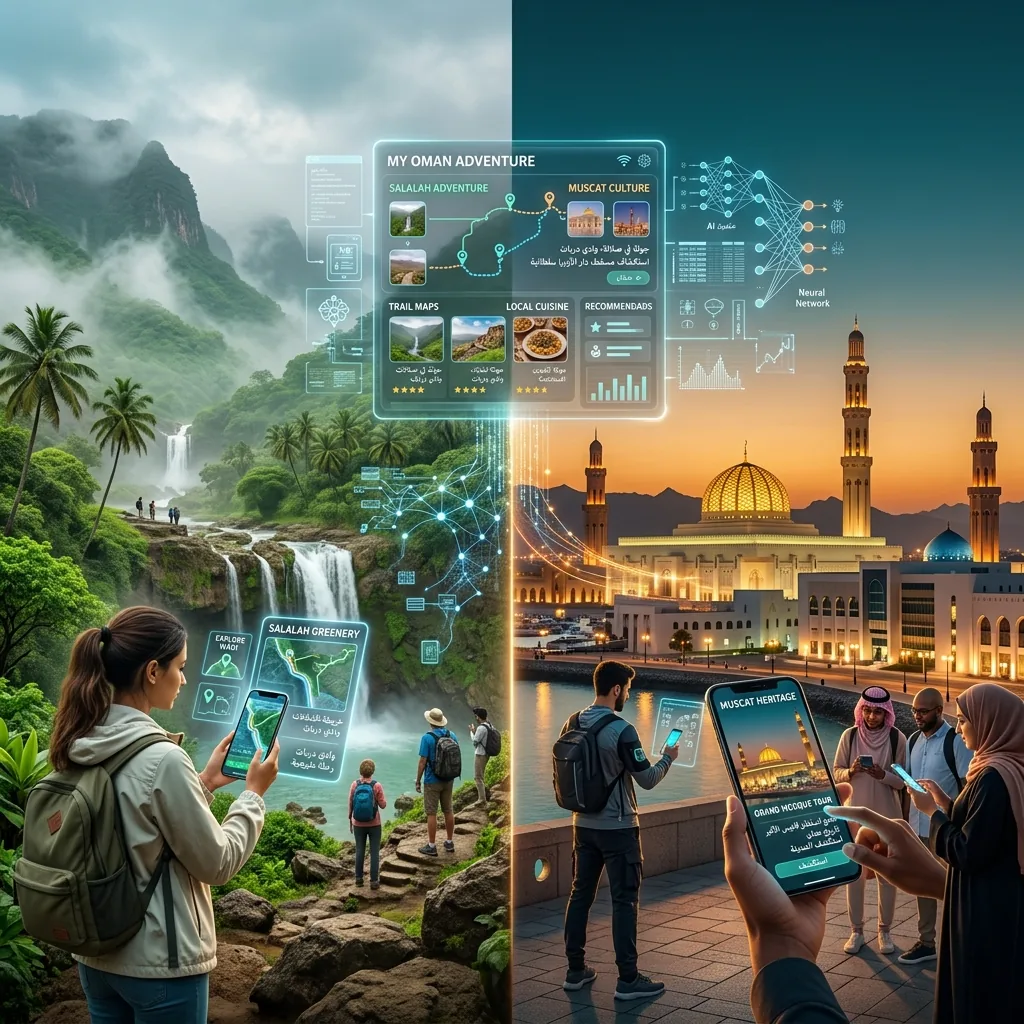
A family from Riyadh lands in Salalah during Khareef season. They want waterfalls but hate crowds. They love seafood but one child is allergic to shellfish. Their hotel concierge hands them the same photocopied brochure given to every guest since 2019. They visit Wadi Darbat at peak hour, wait 40 minutes for parking, eat at a tourist-trap restaurant, and leave a 3-star review. That family won't come back.
This is the exact problem that AI-driven personalization solves—and why Oman's Ministry of Heritage and Tourism, along with private operators in Muscat and Salalah, are investing heavily in smart tourism infrastructure under Vision 2040.
Why Are Oman's Top Tourist Destinations Betting on AI Personalization?
AI personalization in tourism is the practice of using machine learning algorithms to analyze visitor data—preferences, behavior patterns, real-time context—and deliver individually tailored recommendations, itineraries, and services at every stage of the trip.
The numbers tell the story. Oman welcomed over 4.5 million visitors in 2025, with tourism contributing roughly 2.8% to GDP. Vision 2040 targets pushing that contribution to 5-6% by 2030, which means the sector needs to extract more value from each visitor—not just more bodies through airport gates. Generic experiences don't drive the repeat visits and high-spend stays that hit those targets.
Three forces are converging right now:
- The Salalah Khareef surge: Over 800,000 visitors descend on Dhofar Governorate during the June-September monsoon season, creating massive demand spikes that manual operations can't handle
- GCC traveler expectations: Visitors from the UAE, Saudi Arabia, and Kuwait are accustomed to hyper-personalized experiences from luxury brands—they expect the same from tourism
- Government digital infrastructure: The National Program for AI and Advanced Digital Technologies has laid the groundwork with sovereign cloud infrastructure via Omantel's otech and localized AI models like Ma'een
What Does AI-Powered Tourism Actually Look Like in Salalah?
AI-powered tourism in Salalah works by combining weather data, GPS crowd density, guest preference profiles, and local supply data to generate real-time, personalized recommendations—replacing static brochures with dynamic, context-aware guidance.
Here's what's actually being deployed on the ground:
1. Real-Time Crowd Intelligence at Khareef Sites
IoT sensors at popular locations like Wadi Darbat, Ayn Athum (Darbat Falls), and Al Mughsail Beach feed visitor count data into an AI system. When a tourist opens the destination app, the system recommends the least-crowded window for their preferred site—or suggests a comparable alternative. Early pilots during Khareef 2025 showed a 22% reduction in peak-hour congestion at top sites.
2. AI Concierge for Dining and Activities
Instead of generic restaurant lists, an AI concierge cross-references the guest's dietary restrictions, cuisine preferences, budget, and proximity to recommend specific restaurants with available tables. One Salalah resort chain reported their AI dining recommender drove a 31% increase in partner restaurant bookings compared to the old concierge card system.
3. Multilingual Voice and Chat Agents
Tourism businesses handling the Khareef rush deploy AI-powered WhatsApp and voice receptionists that handle booking inquiries in Arabic, English, Hindi, and Urdu simultaneously. These systems manage hundreds of concurrent conversations during peak periods, capturing bookings that would otherwise be lost to busy phone lines.
"During last Khareef, we missed an estimated 40% of phone inquiries because our staff couldn't keep up. This year, the AI receptionist handled 1,200 conversations in the first week alone." — Operations Manager, Salalah boutique hotel
How Are Muscat Hotels and Tour Operators Using AI Right Now?
Muscat's tourism operators are using AI for three primary functions: predictive occupancy management, personalized guest journey mapping, and automated post-stay engagement that drives repeat bookings.
Predictive Occupancy and Dynamic Pricing
Hotels in the Muscat CBD and Al Mouj areas use AI models that analyze historical booking patterns, event calendars (Muscat Festival, Royal Opera House performances), and flight data to forecast occupancy with 89% accuracy up to 30 days out. This feeds dynamic pricing engines that optimize room rates in real time—a capability that one property group credits with a 15% revenue-per-available-room (RevPAR) increase.
Guest Journey Personalization
A visitor checking into a Muscat hotel receives a WhatsApp message with a personalized daily itinerary: "Good morning, Ahmed. Based on your interest in Omani heritage, we recommend the Sultan Qaboos Grand Mosque this morning (current wait: 8 minutes), followed by lunch at Bait Al Luban overlooking Muttrah Corniche (your preferred cuisine: traditional Omani). Your private dhow sunset cruise departs at 4:30 PM from Marina Bandar Al Rowdha."
This isn't hypothetical. Tour operators working with AI-powered booking automation in Muscat are already building these exact workflows using guest intake forms that feed into recommendation engines.
Post-Stay Revenue Recovery
AI systems track which experiences each guest enjoyed most and automatically send personalized follow-up offers 30, 60, and 90 days after checkout. Operators report a 24% higher rebooking rate from AI-personalized follow-ups versus generic email blasts.
What Does It Take to Build an AI Tourism System in Oman?
Building a functional AI tourism personalization system in Oman requires three layers: a data collection layer, a processing and recommendation engine, and a guest-facing delivery channel—typically WhatsApp or a branded app.
Here's the realistic cost and timeline breakdown for tourism operators:
- Phase 1 — AI Receptionist (2-3 weeks, 800-1,500 OMR): Automated booking, FAQ handling, and multilingual inquiry response via WhatsApp Business API
- Phase 2 — Recommendation Engine (4-6 weeks, 2,000-4,000 OMR): Preference profiling, activity matching, and dynamic itinerary generation
- Phase 3 — Predictive Analytics Dashboard (6-8 weeks, 3,000-6,000 OMR): Occupancy forecasting, revenue optimization, and live CEO dashboards for management visibility
The critical requirement: PDPL compliance. Every AI system handling tourist data in Oman must align with the Personal Data Protection Law. This means explicit consent collection, data residency on Omani-approved infrastructure, and clear opt-out mechanisms. Cutting corners here risks fines up to 500,000 OMR.
The Tourism Experience Creators Program
Oman's government has launched the "Tourism Experience Creators" initiative inviting local operators—from wadi guides to frankincense merchants—to submit authentic experiences that are then integrated into the national digital tourism ecosystem. This creates a marketplace where AI can match visitors with hyper-local, vetted experiences they'd never find on TripAdvisor.
Where Is Smart Tourism in Oman Heading by 2030?
Smart tourism in Oman is moving toward fully integrated, AI-orchestrated visitor journeys where every touchpoint—from visa application to airport transfer to hotel check-in to activity booking—is connected through a single intelligent layer.
Three developments to watch:
- Salalah Future City: This planned development integrates smart mobility, AI wayfinding, and digital concierge services directly into the urban infrastructure—essentially building personalization into the city itself
- National AI Tourism Platform: A centralized, AI-driven platform aggregating hotels, transport, and experiences across all governorates, enabling one-stop personalized trip planning for the entire country
- Arabic-First AI Models: With Ma'een and other localized LLMs, Oman is building AI that understands Omani dialect and cultural context—critical for authentic tourism interactions that don't feel like they were written by a Silicon Valley chatbot
The operators who move now—while competitors are still printing brochures—will own the visitor relationship. The ones who wait will be competing on price alone, which is a race to the bottom that nobody in Oman's tourism sector can afford.