
Why Build from Scratch? Because Context is King
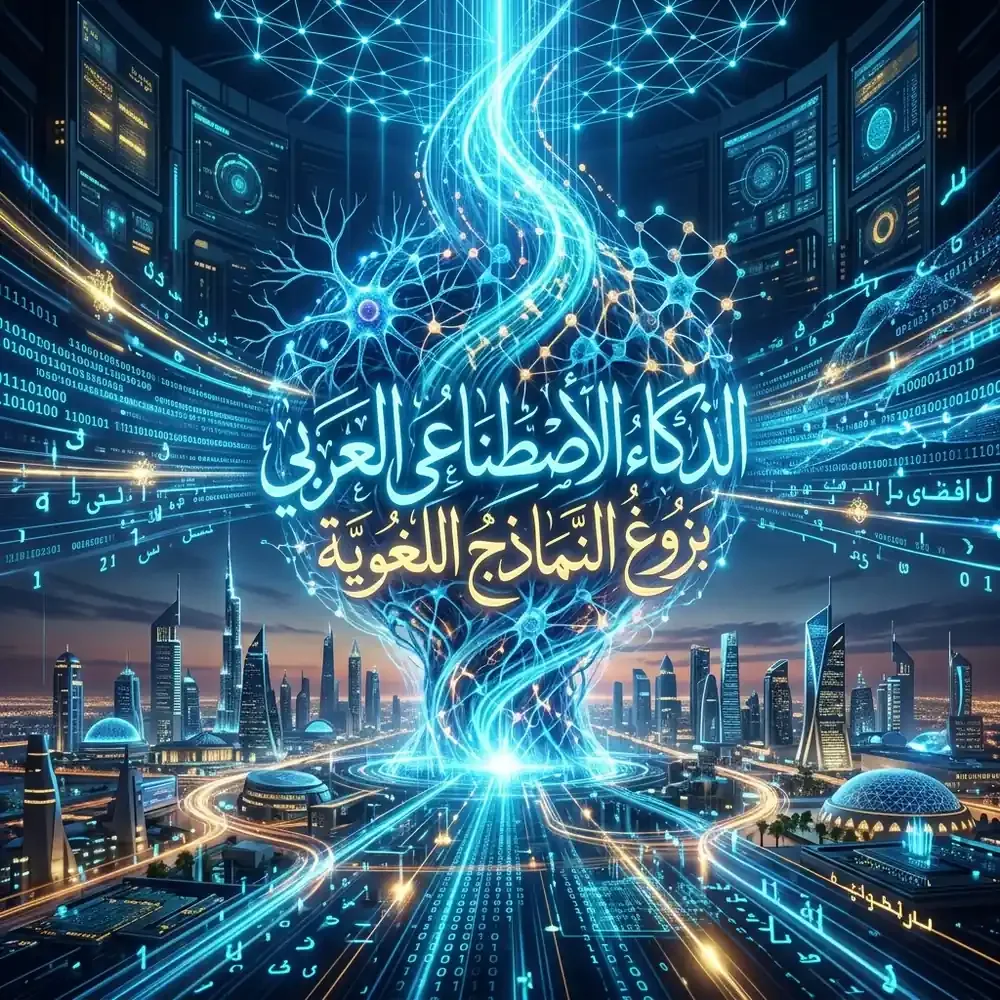
Why invest millions into bespoke Arabic LLMs when established models already exist? The answer is cultural nuance. A model trained primarily on Western datasets and translating post-facto often misses the subtext of Arabic idioms and the intricacies of regional dialects. Arabic is not a monolith; it’s a living tree with branches extending from the Gulf to North Africa. General-purpose models simply don't have the granular capability to distinguish between formal Modern Standard Arabic and the vibrant, highly contextual colloquial dialects used by hundreds of millions daily.
A Regional Race to the Top
Across the GCC and the wider Middle East, the race is on. Saudi Arabia has emerged as a powerhouse with the recent launch of HUMAIN and its impressive ALLaM 34B model, specifically trained on over 500 billion Arabic tokens. Alongside this, startups like Misraj AI have unveiled the Kawn enterprise suite, giving life to dialect-heavy translation tools like Lahjawi.
Meanwhile, the UAE continues to break boundaries. Following the widespread success of Jais—one of the earliest and most advanced bilingual Arabic-English LLMs—Abu Dhabi’s Technology Innovation Institute recently released Falcon-H1 Arabic, a state-of-the-art model that has immediately topped regional leaderboards.
Beyond Text: The Future of Voice and Enterprise AI
The focus isn't strictly on text generation. Tech innovators like Egypt’s Intella, which recently secured $12.5 million in Series A funding, are building formidable Arabic-first speech intelligence capturing over 25 dialects perfectly. Qatar is also actively contributing to this momentum with the Fanar project, emphasizing data accuracy and high-fidelity machine translation.
This surge goes hand in hand with a profound push for digital sovereignty. Regional governments and enterprises want their data processed securely through AI systems that understand local regulations, values, and business nuances intuitively.
Conclusion
The trajectory of artificial intelligence is no longer dictated solely by the West. By training cutting-edge models natively on the Arabic language, innovators in the Middle East are guaranteeing that Arabic culture does not merely survive the AI revolution—it shapes it. The rise of Arabic-first models is more than a technological achievement; it is an assertion of identity in a digital world.