
Managing customer inquiries in a cosmopolitan hub like Dubai presents a unique operational challenge: your customers speak a mix of Arabic and English, and they expect immediate, personalized answers. When your receptionists are overwhelmed by the sheer volume of bilingual messages, response times drop, leading to frustrated clients and lost revenue. In an environment where speed is a competitive advantage, relying solely on manual translation or separate language teams is no longer financially sustainable for growing companies.
The solution lies in advanced automation. Companies across the GCC are rapidly adopting intelligent systems that do the heavy lifting for them. These tools don't just reply with generic templates; they understand context, process natural language, and seamlessly switch between tongues in the middle of a conversation, ensuring every interaction feels native and authentic.
How does WhatsApp AI manage bilingual conversations?
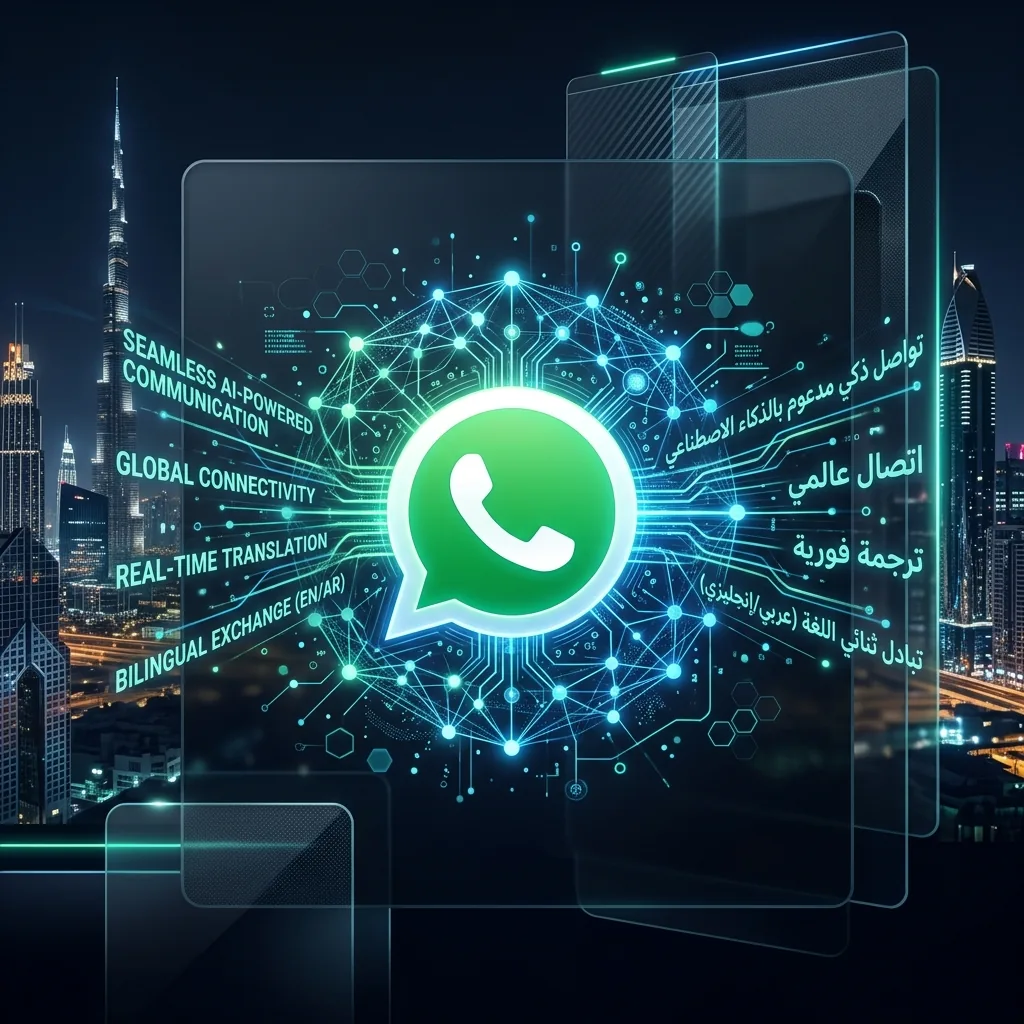
WhatsApp AI manages bilingual conversations by instantly detecting the language of incoming messages and responding natively in real-time. To manage bilingual conversations, you need an AI trained on both Arabic dialects and English nuances to ensure seamless, accurate interactions.
In the fast-paced retail and real estate sectors of Dubai, customer service cannot afford delays. A sophisticated AI receptionist analyzes the syntax and vocabulary of the user's initial message. If a customer types "مرحبا، كم السعر؟" (Hello, what is the price?), the AI immediately switches its context to Arabic, offering culturally appropriate and accurate responses. If the next message is "Can you deliver to Downtown Dubai?", it effortlessly pivots back to English without dropping the conversational thread.
This eliminates the need to route chats to specific language-speaking agents, significantly reducing overhead costs. For example, a mid-sized dental clinic in Muscat recently implemented this technology and saved over 120 hours of manual customer service work per month. By automating 80% of their routine FAQs, their human staff could focus on high-value consultations and complex patient needs.
Why is dual-language AI critical for GCC markets?
Dual-language AI is critical for GCC markets because it bridges the communication gap in highly diverse populations, ensuring no lead is ignored. To succeed in the GCC, businesses need AI that handles both English expats and local Arabic speakers flawlessly.
The Gulf Cooperation Council (GCC) region is uniquely diverse. In the UAE alone, expatriates make up a vast majority of the population, while local Emiratis and other Arab nationals represent a massive purchasing power segment. Traditional chatbots often fail because they are hardcoded to a single language or rely on clunky, literal translations that miss local nuances and regional dialects.
By adopting advanced WhatsApp AI, companies in Dubai and expanding businesses in Oman aligned with Vision 2040, can provide localized experiences at scale. This dual-capability ensures compliance with local expectations while catering to international clients. A recent analysis showed that businesses deploying bilingual AI saw a 35% increase in lead conversion rates compared to those relying on English-only or manual-translation setups.
What is the cost of implementing WhatsApp AI in Dubai?
The cost of implementing WhatsApp AI in Dubai is generally an initial setup fee paired with a monthly subscription, which replaces expensive manual labor. To calculate the exact cost, you need to assess your specific inquiry volume and integration needs.
When evaluating the financial impact, the return on investment becomes clear very quickly. Hiring a dedicated bilingual customer support agent in the UAE can cost upwards of $3,000 to $4,000 per month when factoring in visas, insurance, and benefits. In contrast, a robust WhatsApp AI system typically involves an initial development investment of $2,000 to $5,000, followed by a manageable monthly maintenance fee of $300 to $800 depending on API usage and server loads.
This means the system often pays for itself in less than three months. A luxury car rental agency in Dubai reported saving over $45,000 annually after deploying an AI receptionist. They redirected those saved funds into targeted marketing campaigns across the GCC, fueling further growth without scaling their headcount.
How does AI handle data privacy across borders?
AI handles data privacy across borders by utilizing secure, localized servers and adhering to strict regional data protection regulations. To ensure data privacy, you need a custom AI solution that encrypts WhatsApp messages and complies with local laws.
Consider the implications for a trading company expanding from Sohar to Dubai. They must adhere to cross-border regulations and data privacy norms, such as the Omani PDPL and UAE data protection laws, while serving a broader demographic. Cloud-based AI systems provide centralized control over customer data, ensuring that sensitive information is not scattered across unmonitored employee phones.
Furthermore, integrations with local telecom providers like Omantel in Oman, or Etisalat in the UAE, ensure seamless and secure API connectivity. This level of infrastructure not only protects the business from costly compliance violations but also builds trust with customers who expect their personal information to be handled with the highest standards of security.
What are the best practices for training a bilingual AI?
The best practices for training a bilingual AI include feeding it high-quality, localized datasets and continuously refining its responses based on real chat logs. To train a bilingual AI effectively, you need to input both formal Arabic and regional slang.
It's not enough to plug in a generic language model. The AI must be fine-tuned on the specific terminology of your industry. For a real estate firm in Dubai, the AI needs to understand terms like "Ejari," "RERA," and "Freehold" in both English and Arabic. It should recognize when a user types "شقة للإيجار" (apartment for rent) and seamlessly provide the current listings.
Continuous monitoring is also crucial. By reviewing the AI's chat transcripts, businesses can identify edge cases where the AI might have misunderstood a local idiom. Refining the knowledge base ensures the system grows smarter over time, providing an ever-improving customer experience that feels indistinguishable from a top-tier human receptionist.