

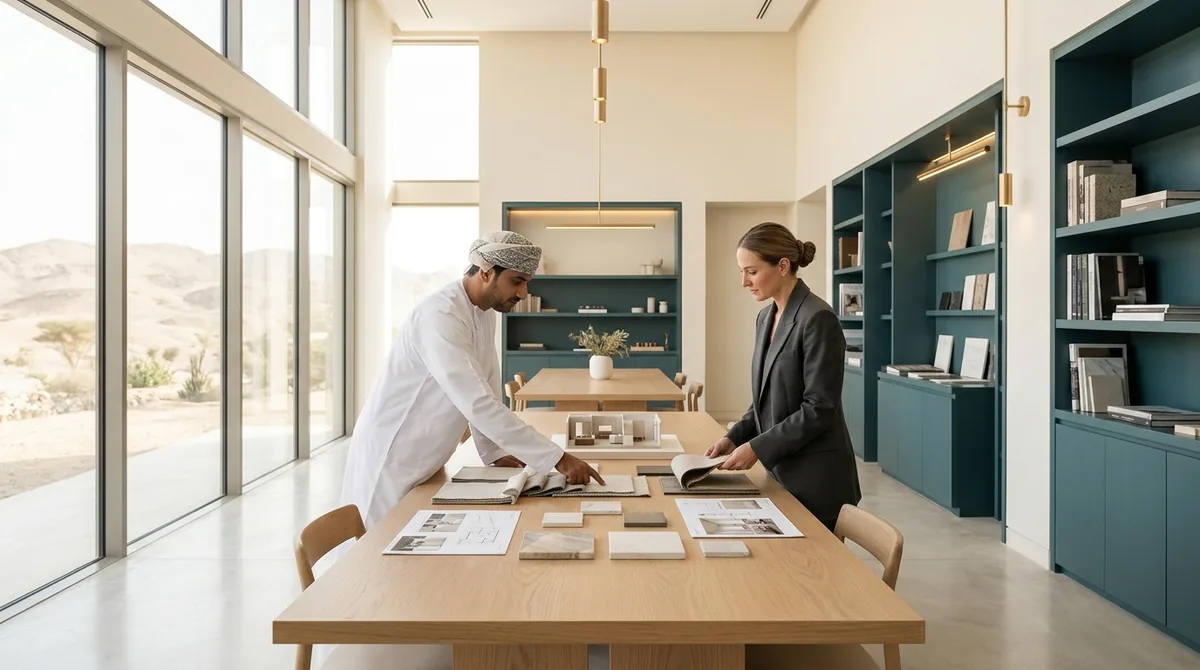
Interior design studios and fit-out contractors across Muscat, Sohar, and Salalah face a common commercial challenge: prospective clients browse stunning social media posts, but bounce within seconds of visiting the company website. In the luxury residential and commercial architecture sector across the GCC, a website cannot function merely as an online business card. High-net-worth homeowners and commercial property developers expect immediate visual inspiration, rapid page responsiveness, and effortless communication channels.
When a website lags under uncompressed portfolio photography or hides contact options behind cumbersome forms, valuable contract opportunities vanish. In 2026, establishing a high-converting digital storefront requires combining editorial-grade imagery with lightning-fast technical performance, intuitive project filtering, and direct WhatsApp consultation workflows. Mastering these core technical and architectural elements allows local design practices to stand out and secure high-value design mandates.
Why Do Interior Design Websites in Oman Need High-Speed Visual Portfolios?
An interior design website in Oman is primarily a visual proof engine where prospective clients evaluate aesthetic pedigree, material craftsmanship, and project scale before booking a consultation or requesting a residential design estimate.
Interior architecture is an intensely visual discipline. Prospective clients planning residential villas in Muscat or commercial spaces in Salalah demand immediate visual evidence of past work. Displaying uncompressed high-resolution project photography creates severe performance bottlenecks on mobile devices.
Technical performance standards suggest that websites should strive to achieve a Largest Contentful Paint of 2.5 seconds or less, as documented by web.dev: Largest Contentful Paint (LCP). When a portfolio page exceeds this threshold, mobile bounce rates climb steeply because homeowners browsing on mobile networks expect quick visual rendering.
To reconcile visual quality with rapid delivery, studios must adopt modern compression formats and edge caching. Technical resources from Cloudflare: How to Speed Up Website Images show that serving next-generation formats like WebP or AVIF reduces image payload significantly compared to legacy JPEG files without losing visual clarity. Responsive image sizing and browser caching ensure that your portfolio loads reliably across all devices, as detailed in our analysis of Website Design Oman: What Local Businesses Need.
What Essential Features Turn Casual Portfolio Visitors Into Qualified Design Leads?
To convert portfolio visitors into design leads, an interior design website must feature interactive before-and-after sliders, budget-qualification intake forms, project scope filters, and direct WhatsApp consultation routing tailored for GCC clients.
A visually stunning website that fails to capture inquiries is merely an expensive digital art gallery. Converting affluent homeowners and corporate procurement teams requires clear pathways from inspiration to direct consultation.
Leading interior design studios incorporate four high-converting functional components:
- Interactive Before-and-After Sliders: Allowing visitors to drag a slider across a completed Muscat living room or renovated commercial lobby instantly demonstrates your design impact.
- Structured Scope and Budget Filters: Give prospective clients options to view projects by category, such as contemporary private villas, corporate office fit-outs, or boutique retail spaces.
- Direct WhatsApp Integration: In Oman and the wider GCC, high-value clients rarely complete multi-step inquiry forms. Integrating direct chat links via the Meta for Developers: WhatsApp Business Platform allows clients to share photos of their current spaces and book preliminary consultations directly.
- Preliminary Project Scoping Forms: For corporate projects, offer a clean intake form that captures square footage, project location, and desired completion timelines.
Pairing these entry points with an automated response system ensures that no inquiry goes unanswered, as outlined in our practical guide to Chatbot for Website: Setup Guide for Oman SMEs.
How Should Oman Studios Structure Project Gallery Pages for Search Engines?
Structuring design gallery pages requires dedicated case study URLs, descriptive alt attributes, structured room metadata, and semantic image markup aligned with Google Search Central guidelines to capture regional interior design search traffic.
Many interior design firms dump dozens of project photos onto a single generic gallery page. While visually appealing, this monolithic layout prevents search engines from indexing individual projects and ranking your studio for targeted local search queries.
As outlined in official documentation from Google Search Central: Google Images SEO Best Practices, search crawlers evaluate surrounding textual copy, descriptive image file names, and contextual alt attributes to understand and rank visual content. Creating dedicated project case studies allows you to optimize each page for high-intent search terms like modern majlis interior design Muscat or luxury kitchen fit-out Oman.
Every dedicated case study page should incorporate:
- Descriptive Headings and Narrative: Detail the client brief, architectural style, spatial challenges, and material finishes chosen for the project.
- Material and Specification Lists: Mention specific premium materials, such as Omani marble, acoustic fluted wall paneling, and custom brass ironmongery.
- Project Location Context: Reference specific developments, such as Al Mouj Muscat, Madinat Sultan Qaboos, or Jabal Sifah, which anchors local search relevance.
How Do Different Website Platforms and Architecture Compare for Design Studios?
Comparing website platforms shows that modern headless setups and optimized CMS architectures provide superior image compression and faster load speeds than legacy bloated page-builders burdened by unoptimized visual plugins.
Selecting the right underlying technical platform determines whether your interior design website remains nimble or becomes bogged down by heavy image libraries and plugin conflicts over time.
Consider an illustrative comparison of common website architectural approaches evaluated by design studios in Oman:
| Website Platform Architecture | Illustrative Setup Cost | Typical Mobile Load Time | Image Optimization Overhead |
|---|---|---|---|
| Custom Headless Architecture | Say 1200 OMR | Say 1.5 to 2.0 seconds | Automated cloud transformation via WebP pipeline |
| Specialized Webflow Studio Setup | Say 750 OMR | Say 2.2 to 2.8 seconds | Built-in responsive image compression |
| Managed WordPress with Custom Theme | Say 600 OMR | Say 2.5 to 3.5 seconds | Requires dedicated CDN and image caching plugins |
| Legacy Template Page Builder | Say 250 OMR | Say 4.5 to 6.0 seconds | Manual image resizing required to prevent lag |
While template builders offer lower initial costs, their sluggish mobile rendering often costs studios far more in lost client inquiries during peak project tender seasons.
How Can Interior Design Firms Comply With Oman Data Privacy Regulations?
To comply with Oman data privacy regulations, interior design websites capturing client floor plans, phone numbers, and residential property locations must implement explicit consent checkboxes under Oman's Personal Data Protection Law.
Interior design firms routinely handle sensitive customer data, including private villa floor plans, residential plot numbers, security specifications, and personal contact information. In Oman, collecting this data through digital contact forms is strictly governed by national privacy legislation.
The Ministry of Transport, Communications and Information Technology: Oman oversees digital governance and data protection compliance under Royal Decree 6/2022, which established Oman's Personal Data Protection Law. Design studios must ensure their digital channels adhere to mandatory privacy standards.
Key compliance measures for studio websites include:
- Clear Purpose Specification: Inform clients exactly how their architectural plans and personal details will be utilized.
- Unchecked Consent Mechanisms: Require clients to actively tick an opt-in box before submitting project briefs or floor plans.
- Secure Cloud Storage: Safeguard architectural files and client phone numbers using encrypted cloud repositories.
- Published Privacy Policy: Maintain a transparent, bilingual privacy statement accessible from the website footer.
Adhering to these privacy standards protects your studio against regulatory liabilities while demonstrating professional integrity to discerning clients, as detailed in our guide on Navigating the PDPL: A Simple Guide to AI-Compliant Chatbots in Oman.