Ma’een AI: Oman’s Sovereign LLM for Government Efficiency
Exploring the impact of the Sultanate's first national large language model on digital sovereignty and public sector productivity.
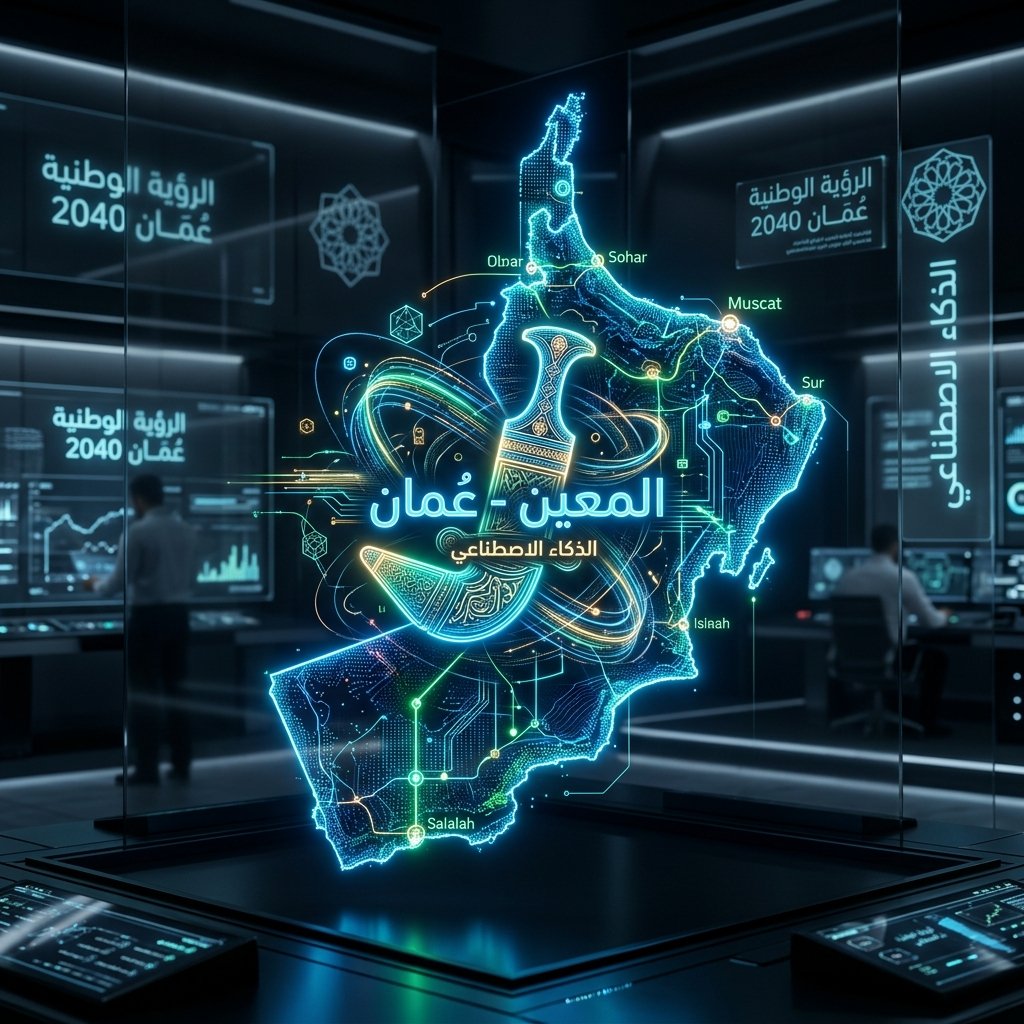
The Sultanate of Oman has officially entered the global AI race with the launch of Ma’een (often stylized as Mu'een), its first national Large Language Model (LLM). Developed by the Ministry of Transport, Communications and Information Technology (MTCIT), Ma’een represents more than just a technological achievement; it is a strategic pillar for digital sovereignty and the realization of Oman Vision 2040.
For Omani business leaders and government officials, Ma’een is a transformative tool designed to bridge the gap between generic AI and the specific linguistic, cultural, and administrative needs of the Sultanate. By processing data with an inherent understanding of local context, Ma’een promises to elevate public sector efficiency to unprecedented levels.
What is Ma’een AI and why does it matter?
Ma’een is a specialized Large Language Model trained specifically on Omani datasets, official documents, and cultural heritage to provide high-accuracy Arabic text processing for government use cases.
While models like GPT-4 are powerful, they often lack the deep cultural nuance and dialectical accuracy required for sensitive Omani government operations. Ma’een fills this void by ensuring that data sovereignty is maintained—sensitive information is processed locally, ensuring national security and compliance with regional regulations.
The Core Objectives of Ma’een
- Operational Efficiency: Automating repetitive administrative tasks and document processing for thousands of government employees.
- Cultural Preservation: Reflecting the unique Omani identity, history, and scientific contributions in its outputs.
- Economic Impact: Reducing the cost of digital transformation by utilizing locally developed high-performance computing assets.
How will Ma’een improve government productivity?
Ma’een is projected to save thousands of man-hours by automating official correspondence, summarizing complex legislation, and providing smart decision support for policy-makers.
In the first phase of implementation, Ma’een is targeting the optimization of internal government workflows. By integrating this LLM into existing digital platforms, the Omani government aims to achieve a 25-40% increase in administrative throughput within key ministries. The model's ability to understand the specific "administrative language" of the Sultanate allows it to draft memos, classify citizen inquiries, and extract insights from national data portals with high precision.
| Metric | Traditional Process | With Ma’een AI | Improvement |
|---|---|---|---|
| Document Summary | 45 Minutes | 30 Seconds | 98.8% Time Saving |
| Policy Analysis | 5 Working Days | 2 Hours | 95% Efficiency Gain |
| Correspondence Drafting | 20 Minutes | 1 Minute | 95% Time Saving |
What role does "Data Sovereignty" play in Oman's AI strategy?
Data sovereignty ensures that Oman's strategic information remains within national borders, protected from foreign interference and managed according to local privacy laws.
The development of Ma’een is intrinsically linked to the National Open Data Portal and the upcoming National AI Supercomputer Center. By building the infrastructure to train and host Ma’een locally, Oman eliminates the risks associated with sending sensitive government data to offshore servers. This "Sovereign AI" approach is becoming a global standard for nations looking to protect their digital future while leveraging the power of generative AI.
"The launch of Ma’een is a decisive step towards Omani digital independence. We are building a future where our technology speaks our language and respects our values." - Representative from MTCIT
Beyond Government: The Future of Ma’een
While the current focus is on the public sector, the underlying technology of Ma’een is expected to eventually benefit the private sector and the broader digital ecosystem in the GCC. The establishment of the AI Studio in Muscat provides a sandbox where specialists can use Ma’een to solve specific industry challenges, from energy sector optimization to specialized healthcare assistance.
As Ma’een continues to evolve, it will likely integrate more deeply with other national pillars, such as the Special AI Zone, creating a concentrated hub for Omani innovation. For managers and business owners, this signals a massive shift in how technology is adopted: it is no longer about importing foreign tools, but about participating in a home-grown digital revolution.
Strategic Integration for Omani Managers
Managers should prepare for the integration of Ma’een-powered tools into national service portals. Understanding how to leverage Omani-contextual AI will be a critical skill for leadership in the coming decade. At AI Profit Lab, we are tracking these developments to help you stay ahead of the curve.
Frequently Asked Questions
What is Ma’een AI?
Ma’een is Oman's first national Large Language Model (LLM), launched by the MTCIT to provide a sovereign AI solution tailored to Omani culture and government needs.
How does Ma’een differ from ChatGPT?
Unlike global models, Ma’een is trained on Omani-specific datasets, ensuring better accuracy in Omani dialects and adherence to local administrative and cultural standards.
Why is data sovereignty important for Oman?
It keeps sensitive government and national data within Oman's borders, ensuring security and compliance with national privacy and security laws.
What is the "AI Studio" in Muscat?
The AI Studio is a platform where government and private sectors collaborate to develop practical AI applications using models like Ma’een.
How does Ma’een support Oman Vision 2040?
It accelerates digital transformation, builds a knowledge-based economy, and improves public sector productivity—all core goals of Vision 2040.
Can private companies use Ma’een?
The initial focus is on government institutions, but the infrastructure is designed to eventually support broader economic sectors across Oman.
What data was used to train Ma’een?
It was trained on Omani history, scientific works, artistic heritage, and official government documentation to ensure local relevance.
Who is leading the Ma’een project?
The Ministry of Transport, Communications and Information Technology (MTCIT) leads the project under the National Program for AI.
How will Ma’een impact employment?
It aims to augment government employees by automating repetitive tasks, allowing them to focus on high-value decision-making and citizen service.
Is Ma’een an Arabic-only model?
While it has a massive focus on superior Arabic and Omani dialect processing, it is built on advanced LLM architecture capable of multilingual tasks.
References
Ready to Automate Your Business Operations?
AI Profit Lab helps non-technical managers in Oman and the GCC deploy custom AI solutions, automated customer service systems, and real-time dashboards to slash overhead costs and eliminate manual busywork.
Book a Free 30-Minute AI Consultation