AI in Omani Insurance: How Automation Increases ROI and Reduces Costs
Discover how Muscat-based insurers are leveraging AI to slash claim processing times by 60% and boost profitability through data-driven risk models.
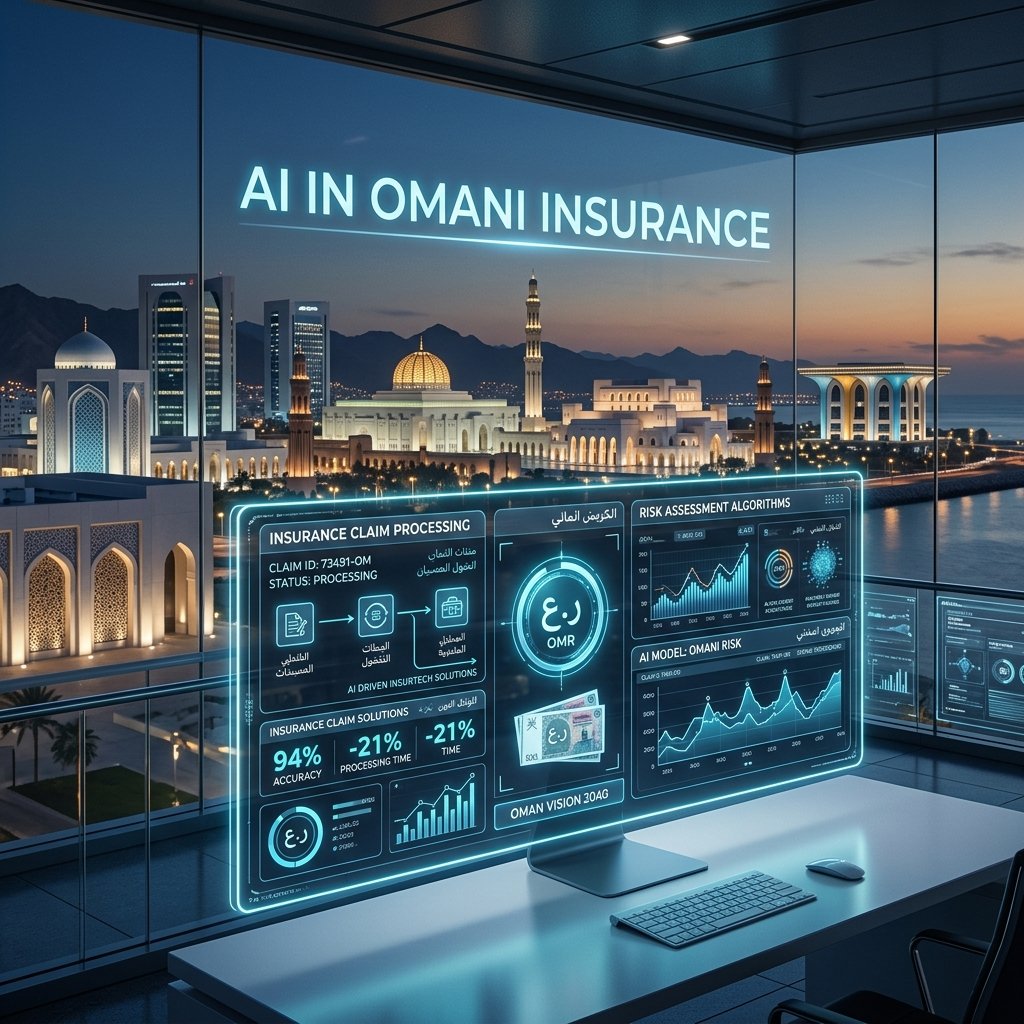
The Omani insurance landscape is undergoing a radical shift. As the Sultanate accelerates toward Oman Vision 2040, the pressure to digitalize has never been higher. For traditional insurers in Muscat and beyond, the challenge is clear: how to manage rising operational costs while staying competitive in a market that increasingly demands instant, digital-first services.
The answer lies in Artificial Intelligence. By integrating AI-driven automation into core workflows—from policy underwriting to claim settlements—Omani insurance companies are not just modernizing; they are fundamentally improving their bottom line. Early adopters are already reporting significant gains in operational efficiency and a marked reduction in loss ratios.
Automating Claims: From Days to Minutes
Manual claim processing is one of the highest overhead costs for Omani insurers. AI-powered OCR (Optical Character Recognition) and NLP (Natural Language Processing) can automate 70% of standard claim documentation, reducing processing time from 5 days to under 30 minutes.
Consider the typical motor insurance claim in Oman. Traditionally, this involves multiple physical documents, manual data entry, and human verification of police reports. This process is slow, expensive, and prone to error. AI agents can now ingest these documents, extract relevant data with 99% accuracy, and cross-reference them with policy details automatically. This allows human adjusters to focus only on complex or high-value cases, drastically reducing the cost per claim.
Precision Underwriting and Risk Assessment
Traditional actuarial models are being enhanced by machine learning algorithms that analyze thousands of data points in real-time. This leads to more precise risk pricing, reducing 'safe' customer premiums while accurately charging for high-risk profiles.
In the Omani market, localized data—such as regional weather patterns, local driving behaviors, and health trends—can be processed by AI to create hyper-personalized policy offerings. This level of precision directly impacts ROI by ensuring that premiums are perfectly aligned with actual risk, thereby reducing unexpected payouts and improving the overall health of the insurance pool.
Reducing Costs Through Fraud Detection
Insurance fraud costs the GCC insurance industry millions annually. AI models can detect anomalous patterns in claim data that are invisible to the human eye, flagging potential fraud before any payout occurs.
| Area of Impact | Traditional Method | AI-Enhanced Method | ROI Impact |
|---|---|---|---|
| Claim Verification | Manual review (3-5 days) | Automated AI Audit (Instant) | 45% Reduction in Admin Cost |
| Fraud Detection | Reactive investigation | Predictive Pattern Analysis | 12% Decrease in Loss Ratio |
| Customer Support | Business hours only (9-5) | 24/7 Multilingual AI Agents | 30% Increase in Retention |
Compliance and Data Sovereignty in Oman
Implementing AI in the Omani insurance sector requires strict adherence to the Capital Market Authority (CMA) guidelines and the Personal Data Protection Law (PDPL).
Insurers must ensure that their AI systems are transparent and that the data of Omani citizens is handled with the highest level of security. This often involves using localized cloud solutions or hybrid AI models that keep sensitive data within the Sultanate. By prioritizing compliance, insurers not only protect themselves from regulatory fines but also build trust with a customer base that is increasingly conscious of data privacy.
"The shift to AI is not about replacing our actuaries; it's about giving them superpowers to process data at a scale previously thought impossible in the Omani market." - Head of Digital Transformation, Muscat Insurance Group
The Path Forward for Omani Insurers
For insurance leaders in Oman, the question is no longer *if* they should adopt AI, but *how fast*. The competitive advantage gained through reduced operational costs and improved ROI will define the market leaders of the next decade. Starting with high-impact, low-complexity use cases—like automated claim intake—is the fastest way to see immediate financial results.
Frequently Asked Questions
How does AI reduce costs for insurance companies in Oman?
AI reduces costs by automating repetitive tasks such as claim intake, policy administration, and document verification. This lowers administrative overhead by up to 40% and minimizes human error in data entry.
Can AI improve ROI for Omani insurers?
Yes, AI improves ROI through more accurate risk assessment, fraud detection, and personalized customer engagement, which increases policy retention rates and reduces payout leakages.
What is the typical ROI timeline for AI implementation in insurance?
Most Omani insurance companies see a full return on investment within 8 to 12 months, depending on the complexity of the automated workflows.
Is AI compliant with Omani insurance regulations?
AI systems must be designed to comply with CMA (Capital Market Authority) regulations and the Omani Personal Data Protection Law (PDPL), ensuring data sovereignty and ethical decision-making.
How does AI impact local hiring?
By automating mundane tasks, businesses can hire higher-skilled workers for strategic roles, elevating the overall capability of the local workforce.
What is the first step to integrating AI into my business?
The first step is a thorough operational audit to identify repetitive bottlenecks and data silos that can be easily automated for quick wins.
Can small SMEs afford AI technology?
Yes, the rise of no-code/low-code platforms has democratized AI, making it highly affordable for SMEs compared to hiring full-time developers.
How much does it cost to implement AI in an Omani business?
Costs vary depending on the scope. A simple workflow automation might cost a few hundred Omani Rials, while a full enterprise AI infrastructure can require a larger investment.
Are there local AI agencies in Muscat?
Yes, local agencies like AI Profit Lab specialize in bringing global AI automation standards to Omani businesses with localized context.
Can AI integrate with my existing ERP or CRM?
Yes, via APIs and webhooks, AI tools can seamlessly integrate with legacy systems like SAP, Oracle, Zoho, and Salesforce.
Scale Your Insurance Operations with AI
Ready to implement AI-driven automation in your insurance firm? Contact AI Profit Lab today for a comprehensive operational audit and implementation roadmap.
Get StartedReferences
Ready to Automate Your Business Operations?
AI Profit Lab helps non-technical managers in Oman and the GCC deploy custom AI solutions, automated customer service systems, and real-time dashboards to slash overhead costs and eliminate manual busywork.
Book a Free 30-Minute AI Consultation