What is the ROI of AI Automation for Logistics and Supply Chain Firms?
Analyzing how logistics operators in Oman and the UAE are utilizing Artificial Intelligence to eradicate operational bottlenecks and compound their Return on Investment in 2026.
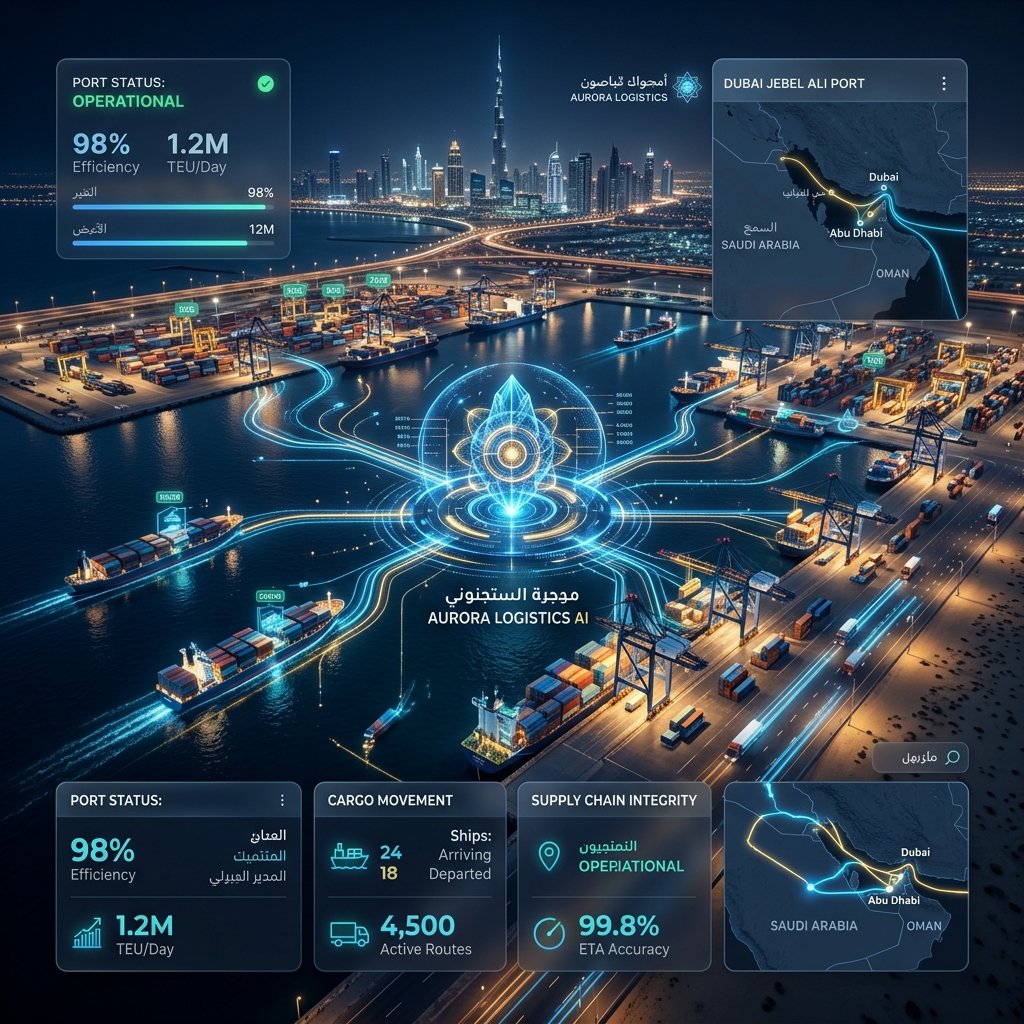
The geography of the Gulf Cooperation Council (GCC) positions it uniquely at the nexus of global trade. Ports in the UAE, such as Jebel Ali, alongside rapidly expanding operational hubs in Oman like Salalah and Sohar, process millions of tons of freight annually. However, in 2026, the velocity of physical trade is being throttled by the friction of legacy administrative processes. Behind every shipping container that moves physically, there is a mountain of documents, customs clearances, vendor communications, and fleet tracking data that must move digitally.
For logistics and supply chain firms operating in Oman and the UAE, the adoption of Artificial Intelligence (AI) automation is no longer an innovation play—it is a strict survival necessity. The critical measure of this transition is Return on Investment (ROI). How quickly can the implementation of AI offset its own costs, and what does the elimination of operational bottlenecks look like on a regional balance sheet? Let's explore the transformative financial realities.
Identifying the Logistics Bottlenecks
In a traditional GCC logistics firm, the most severe operational bottlenecks rarely occur on the asphalt or the ocean; they occur at the desk. The typical lifecycle of a freight forwarder's day involves receiving emailed PDF manifests from international vendors, manually extracting the data line-by-line, matching it against internal ERP systems, chasing clients on WhatsApp for missing shipment details, and manually updating dispatch boards.
This reliance on manual data entry introduces three devastating variables: Speed, Cost, and Error. A single clerical error transposed on a customs bill of lading can result in a cargo container sitting idle at the Port of Sohar for an extra 48 hours. When you factor in demurrage charges, frustrated clients, and wasted staff hours spent unraveling the mistake, one manual data entry error can cost a firm thousands of Omani Rials or Emirates Dirhams.
"In logistics, time isn't just money—time is reputation. AI automation creates time where humans create friction." — Supply Chain Strategy Group, AI Profit Lab
How AI Eradicates Administrative Friction
When applying an enterprise-grade AI automation wrapper to a logistics company, the ROI manifests sharply in the obliteration of repetitive human touching points.
1. Automated Document Processing (Intelligent Document Recognition)
Modern AI agents can monitor a company’s primary 'Operations' email inbox. The moment a supplier emails a 20-page Bill of Lading, a customs manifest, or a packing list, the AI instantaneously reads the PDF, extracts every relevant line of data with near 100% accuracy, and uploads it directly to the company's internal ERP or tracking CRM. What previously took a logistics clerk 20 minutes to read, verify, and type by hand is accomplished by AI in approximately four seconds. Over a quarter, this single automation saves hundreds of administrative hours, allowing the firm to scale its shipment volume without continuously ballooning its headcount.
2. Autonomous Vendor & Client Communication
Supply chain clients are notoriously demanding regarding visibility. They want to know exactly where their cargo is at all times. Instead of a human account manager spending hours answering "Where is my shipment?" queries on WhatsApp, AI-powered communication bots intercept the messages. Trained on the company’s localized Arabic and English dialects, the bot instantly queries the tracking database and responds to the client, e.g., "Your container [ID: 9845] has cleared customs at Jebel Ali and is scheduled for final truck dispatch tomorrow at 08:00." This provides the client with 24/7 visibility while completely freeing the human sales dispatch team.
3. Predictive Maintenance & Fleet Allocation
Advanced logistics firm are implementing predictive AI that analyzes historical fleet routing data, local GCC traffic patterns, and even vehicle maintenance history. The system can autogenerate the most physically and economically optimized route for a shipping fleet each morning. Furthermore, it flags when a specific truck might require preventative maintenance before a critical failure occurs on the highway between Dubai and Muscat, preventing costly breakdowns.
Calculating the Concrete ROI
To understand the true ROI of AI automation in a GCC logistics context, we must measure the saved capital expenditures against the automation investment.
Let's simulate a mid-sized freight forwarding company in Oman processing roughly 300 shipments a month. They employ three operations specialists primarily for data entry, client tracking updates, and manifest alignment, costing an aggregate payroll of roughly OMR 2,500 monthly.
If the firm installs an advanced AI automation suite (for example, the AI Profit Lab 'SCALE' package) at a one-time setup cost of OMR 2,500 and a monthly maintenance of OMR 300, the system will autonomously process all inbound manifests, handle 85% of standard client tracking queries via WhatsApp, and instantly flag customs exceptions.
The AI effectively eliminates the need for two out of three data-entry roles (or allows those employees to be repurposed into actual high-value sales, bringing in new revenue). The immediate monthly payroll savings offsets the system's maintenance fee entirely by month two. By eliminating demurrage charges caused by human-typing errors and accelerating dispatch cycles by 40%, the firm typically realizes a positive cash flow ROI within the first 60 days. In year one, the compounding efficiency often yields an ROI exceeding 400%.
Strategic Dominance in the Region
Both the UAE and Oman are positioning themselves as premier global logistics hubs. The Omani government’s Vision 2040 places a massive premium on integrating technology fundamentally into its infrastructure.
For B2B logistics firms operating in these environments, the choice is stark. Competitors utilizing AI are issuing quotes faster, tracking freight flawlessly, running with a lower human administrative overhead, and thus, offering tighter pricing margins to clients. A manual supply chain firm simply cannot outbid an automated one over a long enough timeline. Investing in AI today ensures that a logistics company doesn't just survive the digital transition; it leverages it directly into profound market dominance.
Frequently Asked Questions
How does AI automation specifically improve supply chain ROI?
AI drastically improves ROI by replacing costly, error-prone human data entry with instant, autonomous document processing. This reduces administrative payroll, eliminates expensive customs delays caused by typos, and speeds up entire freight routing cycles.
Can AI integrate with existing GCC logistics systems?
Yes. Custom AI automation tools can act as "connective tissue" bridging legacy ERPs or localized customs clearance platforms via API or intelligent web-scraping to sync data effortlessly.
Will AI eliminate human jobs in Oman's logistics sector?
AI eliminates tedious, repetitive administrative tasks like copy-pasting tracking numbers. This allows human workers to pivot toward high-value tasks, like strategic vendor negotiation, relationship building, and handling complex logistical crises that require human intuition.
How do AI chatbots assist freight forwarders and clients?
AI chatbots, integrating directly with WhatsApp or websites, can autonomously answer client queries such as "Where is my shipment?" by instantly reading the company's live tracking database, providing 24/7 service without human intervention.
What is Intelligent Document Recognition in logistics?
It is an AI technology capable of 'reading' unstructured documents like PDFs, Bills of Lading, or supplier invoices to instantly extract critical data (weights, contents, destination) and input them into a database perfectly.
What is the average payback period for logistics AI automation?
Due to the high cost of manual administrative error and dispatch delays, most mid-sized GCC logistics companies recoup their initial AI setup investment within 60 to 90 days of aggressive implementation.
How can AI mitigate truck breakdowns or fleet disruptions?
AI implements predictive maintenance. By analyzing vehicle sensor data and historical repair patterns, the AI will alert operators to replace a critical part before the vehicle ever fails on a busy shipping route.
Does AI help in reducing port demurrage fees?
Absolutely. A vast number of demurrage and storage fee penalties at ports like Sohar or Jebel Ali stem from delayed or inaccurate paperwork. AI ensures documentation is processed instantly and perfectly, bypassing bureaucratic hold-ups.
How does AI automation align with Oman Vision 2040?
Oman Vision 2040 mandates diversifying the economy beyond petroleum by becoming a high-tech, digitally empowered global logistics hub. Integrating AI fulfills this specific mandate of industrial digital transformation.
Is the data passing through logistics AI systems secure?
Top-tier enterprise AI implementations ensure localized data processing with closed-loop architectures. Sensitive client routing manifests and pricing structures remain securely encrypted and out of public LLM datasets.
How does AI improve supply chain management?
AI predicts demand fluctuations, optimizes delivery routes in real-time, and automates inventory reordering, significantly reducing logistical costs.
How long does it take to see ROI from AI implementation?
Many businesses in the GCC report seeing a positive Return on Investment within 3 to 6 months of deploying targeted AI workflow automations.
How does AI impact local hiring?
By automating mundane tasks, businesses can hire higher-skilled workers for strategic roles, elevating the overall capability of the local workforce.
How do we train our staff to use new AI systems?
A reputable AI agency provides comprehensive onboarding, standard operating procedures (SOPs), and ongoing support to ensure smooth user adoption.
Does AI automation align with Oman Vision 2040?
Absolutely. AI and digital transformation are key pillars of Oman Vision 2040, aimed at diversifying the economy and increasing operational efficiency.
Can AI help with marketing and lead generation?
Yes, AI can analyze market trends, generate personalized ad copy, and automatically score incoming leads based on their likelihood to convert.
Is my company's data safe when using AI?
Yes, provided you use enterprise-grade AI models with strict data privacy agreements or deploy on-premise solutions that comply with Oman's data protection laws.
Will AI tools support the Arabic language perfectly?
Recent advancements in LLMs have significantly improved Arabic comprehension, including Khaleeji dialects, making them highly effective for the Omani market.
Do I need a technical background to use AI automation?
No, modern AI automation platforms and custom dashboards are built for non-technical managers, with intuitive interfaces and clear ROI tracking.
What if the AI makes a mistake with a customer?
Proper AI implementations use deterministic guardrails and RAG (Retrieval-Augmented Generation) to prevent hallucinations, often keeping a 'human-in-the-loop' for sensitive interactions.
References
Ready to Automate Your Business Operations?
AI Profit Lab helps non-technical managers in Oman and the GCC deploy custom AI solutions, automated customer service systems, and real-time dashboards to slash overhead costs and eliminate manual busywork.
Book a Free 30-Minute AI Consultation