
We are standing at a critical juncture in technological history. In the headlong rush to build faster, smarter, and more autonomous artificial intelligence systems, the global tech industry has occasionally sidelined the most important question: Ought we to build this? The conversation around AI ethics is no longer a philosophical luxury reserved for university lecture halls; it has become an urgent business imperative. In 2026, as AI drives everything from loan approvals to medical diagnoses, the ethical frameworks guiding these algorithms are under intense localized scrutiny.
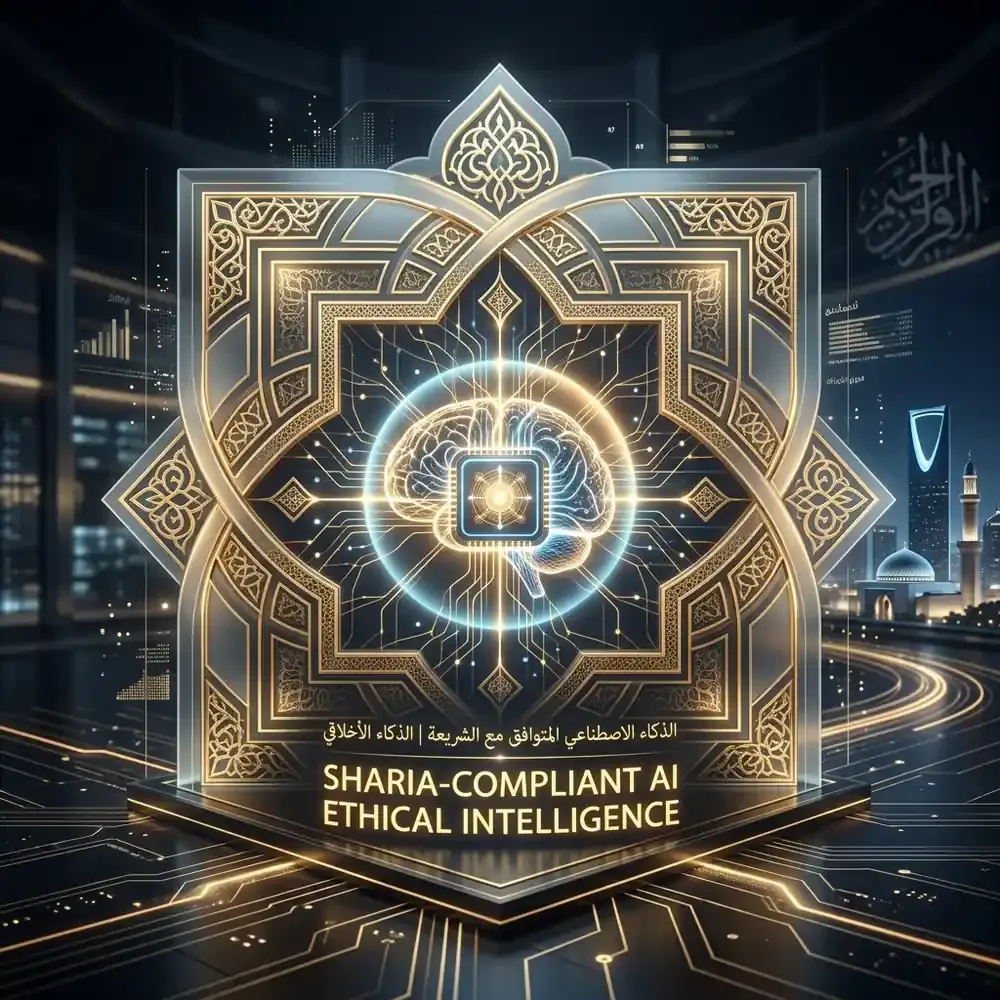
Nowhere is this transformation more profound and actionable than in the Middle East. While Western regulatory bodies like the EU struggle to retroactively apply compliance layers over existing models, the Gulf Cooperation Council (GCC)—spearheaded by forward-thinking initiatives in Oman, Saudi Arabia, and the UAE—is building AI governance from the ground up. Their foundational blueprint isn't just corporate policy; it is the integration of AI ethics with Sharia compliance.
The Convergence of Technology and Morality
To understand the synergy between AI and Sharia, we must first break down what Sharia compliance fundamentally means in a business context. Often misunderstood as merely a rigid set of historical legalisms, Sharia, especially concerning commerce and finance (Fiqh al-Mu'amalat), is a deeply ethical framework. It prioritizes the preservation of life, intellect, wealth, lineage, and religion (the Maqasid al-Sharia). It intrinsically opposes deceit (Gharar), exploitation, societal harm, and the systemic concentration of wealth through unethical monopolies.
When you map these principles onto modern artificial intelligence, the overlap with global "tech ethics" is startlingly exact. The Western cry for "algorithmic fairness" is mirrored perfectly by the Sharia mandate for justice (Adl). The modern demand for "data privacy and consent" is reflected in Islamic principles of human dignity and the prohibition of spying or unauthorized exposure of private lives. By utilizing Sharia as a foundational governance model, Middle Eastern tech firms aren't just localizing AI; they are fundamentally upgrading its moral operating system.
"Sharia compliance in AI is not a limitation on innovation. It is a sophisticated filter that removes algorithmic harm, ensuring that technology serves humanity rather than exploiting it." — Dr. Amina Al-Hassan, AI Ethics Council, 2026
Sharia-Compliant AI in the Financial Sector (Islamic Fintech)
The most immediate and lucrative application of Sharia-compliant AI is within the Islamic finance sector, an industry projected to exceed $4 trillion by the end of the decade. Traditional machine learning models used by Wall Street banks to determine creditworthiness or execute high-frequency trades are deeply problematic under Islamic law.
Mainstream AI credit models often factor in interest-bearing metrics (Riba) or leverage socioeconomic data that inadvertently punishes marginalized communities—a clear violation of fairness. A Sharia-compliant AI system must be explicitly programmed to ignore Riba-based variables and instead evaluate equity, profit-and-loss sharing structures (Mudarabah), and tangible asset backing.
Furthermore, robo-advisors and algorithmic trading bots must be audited to ensure they do not engage in speculative, highly volatile trading that mimics gambling (Maysir). In 2026, developers in Dubai and Muscat are training specific LLMs that can instantly audit thousand-page corporate contracts to ensure every clause adheres to Islamic finance principles—a task that previously took human scholars weeks to complete.
Tackling Algorithmic Bias and Discrimination
One of the most insidious problems in modern AI is encoded bias. Because Large Language Models (LLMs) like GPT-4 or Claude digest the entirety of the internet, they absorb human prejudices. When unmanaged, these AIs have been known to exhibit racial profiling in predictive policing or gender bias in resume-screening software.
From a Sharia perspective, discrimination based on race, gender, or nationality is fundamentally unjust. Therefore, "Sharia-compliant AI" requires rigorous data cleaning and "halal data scraping." This means developers cannot simply train their models on massive, unfiltered data lakes. The data must be ethnically sourced, ensuring consent and representational equity. Middle Eastern companies are currently leading the charge in developing "Data Cleansing Nodes"—intermediary AI systems whose sole job is to scrub training data of discriminatory historical biases before it ever reaches the primary LLM.
The Question of Deepfakes and Deception (Gharar and Najash)
The explosion of generative AI has brought about the era of the Deepfake—hyper-realistic audio and video forgeries capable of destroying reputations or manipulating stock markets in minutes.
Islamic ethics explicitly condemns Gharar (deception, uncertainty, and fraud) and Najash (false solicitation or artificial inflation of value). Consequently, Sharia-compliant AI frameworks require strict verifiable watermarking for any synthetically generated media. If an AI generates a marketing image or a predictive market report, it must transparently declare its synthetic origin. In Oman, new tech startups are deploying blockchain-verified hashing alongside AI generation, ensuring that digital truth can be independently verified, thus preserving societal trust.
Data Privacy: The Sanctuary of the Individual
In global tech, data is often treated as a raw resource to be strip-mined without consequence. Sharia law, however, places a massive emphasis on human dignity (Karamah) and privacy, strictly forbidding the unwarranted exposure of private matters.
In the context of AI, this means that Sharia-compliant systems must implement "Privacy by Design." We are seeing rapid adoption of Federated Learning in the GCC. Federated Learning allows an AI model to learn from diverse datasets (like patient records across various national hospitals) without the actual patient data ever leaving the local hospital's secure server. The AI learns the *patterns* without ever accessing the *identities*, perfectly aligning medical AI advancement with the Islamic mandate for absolute patient confidentiality.
The Commercial Advantage of Ethical Positioning
It is a misconception to think that adding ethical compliance slows down business. In reality, it opens up entirely new demographic markets. There are nearly 2 billion Muslims globally who are becoming increasingly concerning about the digital tools they use. Tech companies that can mathematically and certifiably prove their AI systems are Sharia-compliant possess a massive competitive moat in regions like the MENA, Southeast Asia, and beyond.
Furthermore, European and North American non-Muslim enterprises are increasingly purchasing licenses for these Sharia-compliant models. Why? Because an AI system rigorous enough to pass Sharia compliance inevitably complies with the EU's GDPR and the strictest global ESG (Environmental, Social, and Governance) standards by default.
Conclusion: Building Tech with a Soul
The narrative of the 2020s was about moving fast and breaking things. In 2026, the narrative is about building systems that will safely govern our future. The intersection of AI ethics and Sharia compliance is providing a much-needed philosophical anchor to a technology that threatens to run away from human control. By hardcoding justice, transparency, and dignity into the algorithms themselves, the Middle East is proving that the most advanced technology can—and must—coexist perfectly with our oldest and most profound moral truths.