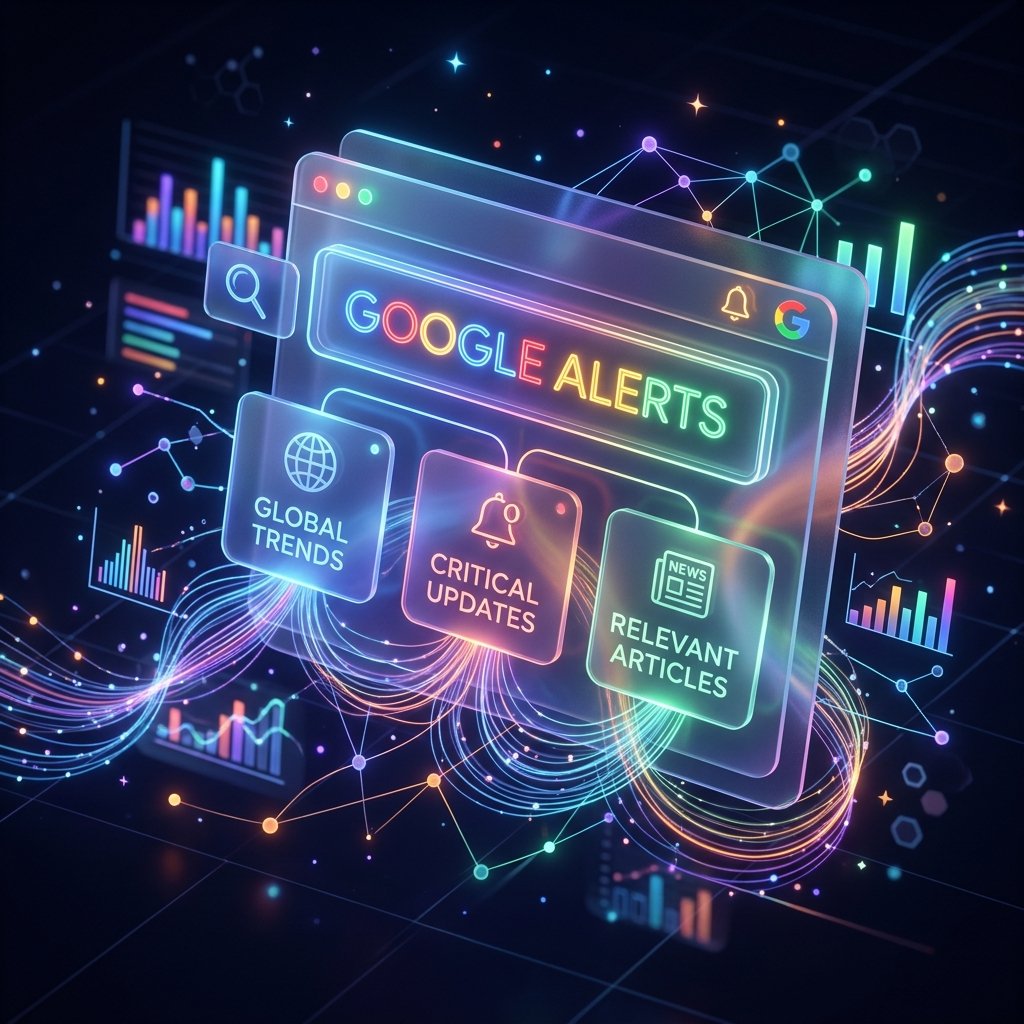
In an era of notification overload and rapid shifts in digital privacy tools, staying informed can feel like drinking from a firehose. Yet, amidst sweeping algorithmic changes and sunsetting services, one unsung hero remains firmly anchored in the digital ecosystem.
Imagine it's a brisk Tuesday morning in early 2026. You open your inbox expecting the usual flurry of newsletters and marketing blasts, but there, sitting quietly at the top, is a precisely targeted brief. It tells you exactly what competitors are saying about your niche industry, mentions of your brand across global forums, and the latest trends in autonomous tech. This isn't magic; it's the enduring capability of Google Alerts.
The Shift in Google's Notification Landscape
To understand the current state of Google Alerts, we have to look at the broader tectonic shifts happening within Google's security and notification ecosystem. Recently, the tech giant made a significant pivot. The highly discussed "Dark Web Report"—a feature designed to alert users if their personal information leaked onto the dark web—was officially discontinued. Google's reasoning? The tool didn't offer users clear enough actionable steps.
Instead of leaving millions in the dark, Google shifted focus toward empowering users with more direct control. Tools like the Security Checkup, Password Checkup, and the "Results About You" feature (which actively helps you scrub personal data from Google Search) took center stage. At the same time, platforms like Chrome and YouTube began aggressively curtailing "notification overload," silencing pings from channels and services users no longer engaged with.
Why Google Alerts Survives and Thrives
So, where does this leave Google Alerts? While passive, automated notifications are being trimmed across the web, intent-driven monitoring is more vital than ever. Because users actively define their queries and dictate their frequency (whether as-it-happens, daily, or weekly), Google Alerts bypassed the "notification overload" purge entirely.
Today, the tool is a masterclass in elegant simplicity. Savvy marketers and proactive business owners utilize it as an indispensable asset for reputation management and competitive monitoring. By tracking specific keywords, you can instantly see when a new blog post mentions your startup, when a competitor launches a new feature, or when a niche topic suddenly gains mainstream traction.
The Blueprint for Smart Monitoring
Setting up the perfect alert isn't just about typing in a name; it's about crafting an ear to the ground. Combining exact phrases wrapped in quotes with specific source filters—like singling out "news" or "discussions"—transforms Google Alerts from a simple search tool into a personalized intelligence agency. In an age where information is abundant but context is scarce, maintaining this free pulse on the internet is a strategic imperative.
As we navigate the rest of 2026, the sunsetting of the Dark Web Report reminds us that not all alerts are created equal. Actionable, user-defined intelligence will always win over passive noise. So, while the digital landscape continues to evolve at a breakneck pace, the simple, brilliant mechanism of Google Alerts remains—standing guard, filtering the noise, and delivering exactly what you need to know, directly to your inbox.
Frequently Asked Questions
Can small SMEs afford AI technology?
Yes, the rise of no-code/low-code platforms has democratized AI, making it highly affordable for SMEs compared to hiring full-time developers.
What if the AI makes a mistake with a customer?
Proper AI implementations use deterministic guardrails and RAG (Retrieval-Augmented Generation) to prevent hallucinations, often keeping a 'human-in-the-loop' for sensitive interactions.
What is the first step to integrating AI into my business?
The first step is a thorough operational audit to identify repetitive bottlenecks and data silos that can be easily automated for quick wins.
How long does it take to see ROI from AI implementation?
Many businesses in the GCC report seeing a positive Return on Investment within 3 to 6 months of deploying targeted AI workflow automations.
How does AI impact local hiring?
By automating mundane tasks, businesses can hire higher-skilled workers for strategic roles, elevating the overall capability of the local workforce.
How does AI handle customer support outside of business hours?
AI chatbots and voice agents provide 24/7 instant responses, capturing leads and resolving common issues even when your physical office is closed.
Is my company's data safe when using AI?
Yes, provided you use enterprise-grade AI models with strict data privacy agreements or deploy on-premise solutions that comply with Oman's data protection laws.
How does AI improve supply chain management?
AI predicts demand fluctuations, optimizes delivery routes in real-time, and automates inventory reordering, significantly reducing logistical costs.
Is cloud-based AI legal for government contractors in Oman?
Government contractors must adhere to MTCIT guidelines, which often require data sovereignty and hosting sensitive data on local Omani servers.
What is Retrieval-Augmented Generation (RAG)?
RAG is a technique where an AI model securely searches your private company documents before answering a question, ensuring accuracy and context.
References
- Google Alerts Official Page
- Gulf News: Google to discontinue dark web monitoring
- Forbes: Google's war on notification overload
Ready to Automate Your Business Operations?
AI Profit Lab helps non-technical managers in Oman and the GCC deploy custom AI solutions, automated customer service systems, and real-time dashboards to slash overhead costs and eliminate manual busywork.
Book a Free 30-Minute AI Consultation